



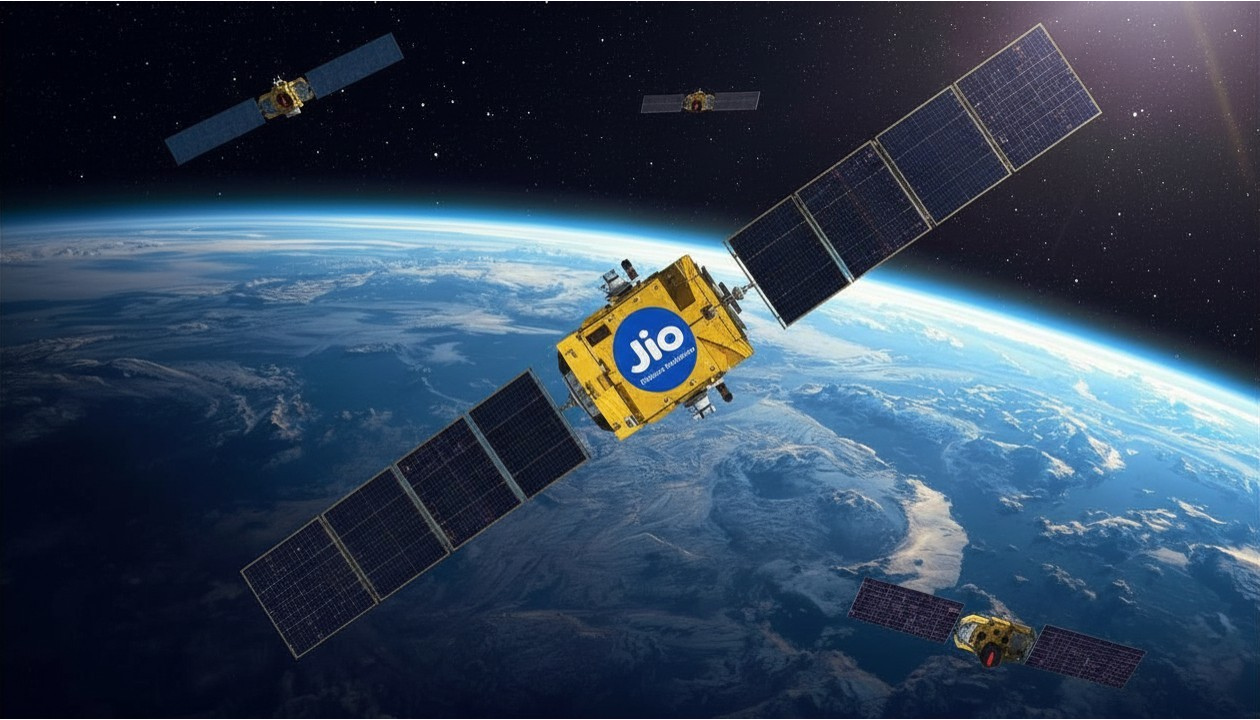
When Elon Musk’s Starlink was fighting regulatory battles to enter India, the assumption in most boardrooms was that the real competition would come from Bharti Airtel-backed OneWeb or Amazon’s Kuiper. Few expected Mukesh Ambani to respond by building his own constellation.
But that appears to be exactly what Reliance Industries is now planning.
According to a report by The Economic Times, Reliance is exploring an entry into the Low Earth Orbit (LEO) satellite business, housed under Jio Platforms, the same entity that transformed India’s mobile internet market when Jio launched in 2016, which disrupted the market by offering free 4G voice and data services for several months. The move, if it materialises, would put Reliance in direct competition with Starlink, Amazon Kuiper, and Eutelsat OneWeb — three of the most well-capitalised satellite ventures on the planet.
The scale of ambition is striking. The ET report says Mukesh Ambani is personally leading the initiative alongside senior executives including Reliance president PK Bhatnagar, Jio Platforms CEO Mathew Oommen, and senior vice president Aayush Bhatnagar. Six dedicated teams have reportedly been formed to work on launches, payloads, satellites, and user terminals — suggesting this is well past the stage of casual exploration.
Why LEO, and Why Now
LEO satellites, which operate at altitudes between 500 and 2,000 km, far closer to Earth than traditional geostationary satellites, have become the defining battleground in global broadband infrastructure. Their proximity to Earth’s surface means dramatically lower latency and higher speeds, making them viable for everything from rural broadband to enterprise connectivity to defence applications.
Starlink, which now operates over 7,000 satellites globally, has demonstrated what a mature LEO constellation can do. Amazon’s Kuiper is spending over $10 billion to build a competing network. China, meanwhile, has filed plans for approximately 200,000 satellites across multiple LEO constellations at the International Telecommunication Union, a number that has alarmed space policy experts worldwide and accelerated the orbital slot land-grab among major economies.
India has not been immune to this urgency. The Indian government has been vocal about its desire to build a domestic satellite communications ecosystem, conscious of the strategic risks of depending entirely on foreign infrastructure for next-generation connectivity. Reliance’s reported discussions with the Department of Telecommunications (DoT) regarding orbital slot filings at the ITU signal that the company is moving with that national priority in mind — and that it understands the window for securing valuable orbital real estate is closing fast.
The Jio Playbook, In Space
If Reliance’s satellite ambitions follow the pattern of its telecom entry, the implications for the market could be significant. When Jio launched in 2016, it offered free voice and near-free data, forcing Airtel, Vodafone, and Idea into mergers and write-downs from which the industry took years to recover. Average data prices in India dropped to among the lowest in the world — a boon for consumers, a bloodbath for incumbents.
A similar dynamic is unlikely to play out identically in satellites — the economics of building and launching a LEO constellation are fundamentally different from rolling out mobile towers. But Reliance’s track record of entering markets with the intent to dominate rather than merely participate should give existing players a cause of worry.
The ET report notes that Reliance is also examining acquisition opportunities, particularly companies that already own orbital slots and operational infrastructure. This could significantly accelerate its timeline. The company already has a partnership with satellite communications firm SES for medium earth orbit services, giving it some existing familiarity with the sector.
A Market Worth Fighting For
The commercial prize is substantial. India remains one of the world’s largest underpenetrated internet markets, with hundreds of millions of people in rural and remote areas still lacking reliable broadband access. Satellite internet is widely seen as the most viable solution for these communities — terrain, distance, and the economics of laying fibre make terrestrial solutions impractical in many regions.
At the same time, the enterprise and government segments are growing rapidly. Defence, maritime, aviation, and critical infrastructure all represent high-value use cases for satellite connectivity that go well beyond consumer broadband.
Starlink, which is expected to launch in India with a setup fee of around ₹30,000 and a monthly subscription of approximately ₹3,300, will target the premium end of this market. At those price points, it is not a mass-market product — at least not yet. That gap between premium satellite internet and affordable terrestrial options is exactly the kind of market inefficiency that Reliance has historically moved to exploit.
What Comes Next
The ET report is careful to note that discussions are still at an exploratory stage, with no final timeline or investment amount confirmed. Reliance may be looking at a two-to-four year horizon to have LEO satellites operational — a timeline that would see it entering a market where Starlink and Kuiper will already be established.
That is a challenge. But it is worth remembering that when Jio entered the mobile market in 2016, Airtel and Vodafone were already deeply entrenched. It did not matter.
The satellite internet race in India just became considerably more interesting.